Cool Things to Draw Simple
What you'll learn:
- What to draw: step-by-step guides.
- How to draw a bird.
- How to draw a domestic dog.
- How to describe a wolf.
- How to draw a horse.
- How to draw a rose.
- How to describe a confront.
- How to draw eyes.
- How to draw a nose.
- How to depict a mandala.
- 30 more ideas of things to draw.
- 7 drawing techniques for beginners.
- How to proceed inspired and motivated.
What to describe: step-by-stride guides.
To help become you started, we've selected some simple objects you can try and sketch. Whether it's with pen and newspaper or using Adobe Sketch, we'll run through them step-past-stride, so yous can learn the basics first.
Recall, practise makes perfect. You might not nail the detail first time around, then keep trying to go the final drawing correct.
Earlier you start, it'due south worth downloading a few reference photos of each of the post-obit objects from Adobe Stock. Keep this open in a window on your figurer or tablet, so it'll give you something to mimic with your ain drawing.
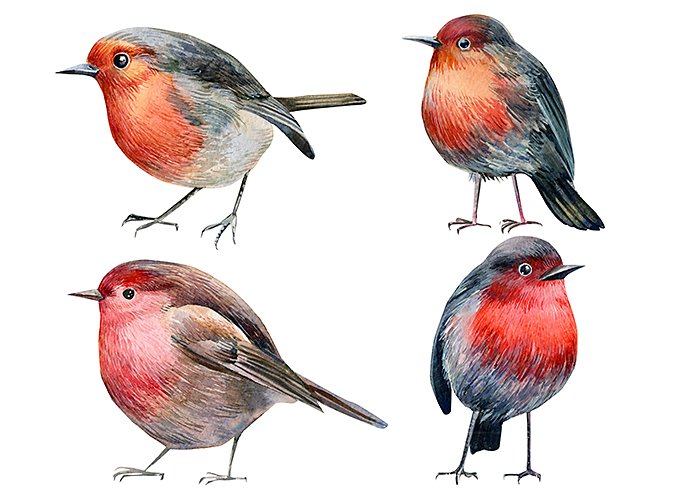
How to describe a bird.
1. Start by cartoon a large oval or teardrop for the body – if yous cull a teardrop, the point of the shape should face away from where the head will exist.
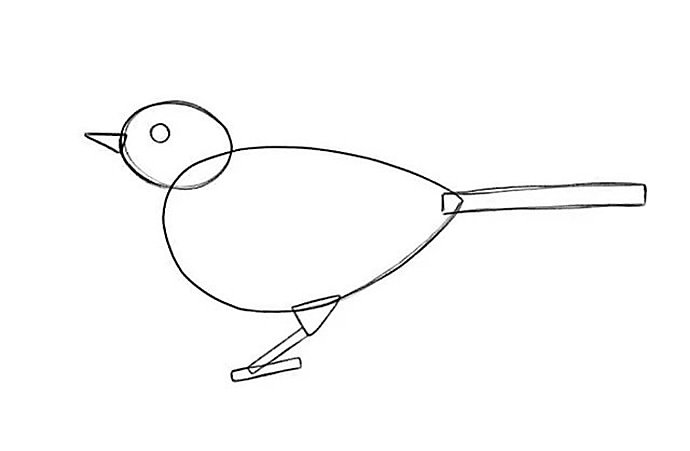
ii. Create a circle that is half the size of the oval, to draw a bird's caput.
3. Separate both of these shapes into quarters.
four. Sketch a couple of curved lines for a neck, to adhere the head to the body, then add together a triangular nib and tail.
v. Sketch downwardly from the middle point in the oval body to add legs and anxiety.
half dozen. Add a z-like shape at the top-left of the oval, to add shoulders – where you'll draw wings later.
7. Use your reference photo to add the total outline of the bird and build the body construction from there.
8. Finally, draw in the boosted layers, including wings and lines for feathers. If digital sketching and adding colour, try using the watercolour brushes in Adobe Fresco.
How to depict a dog.
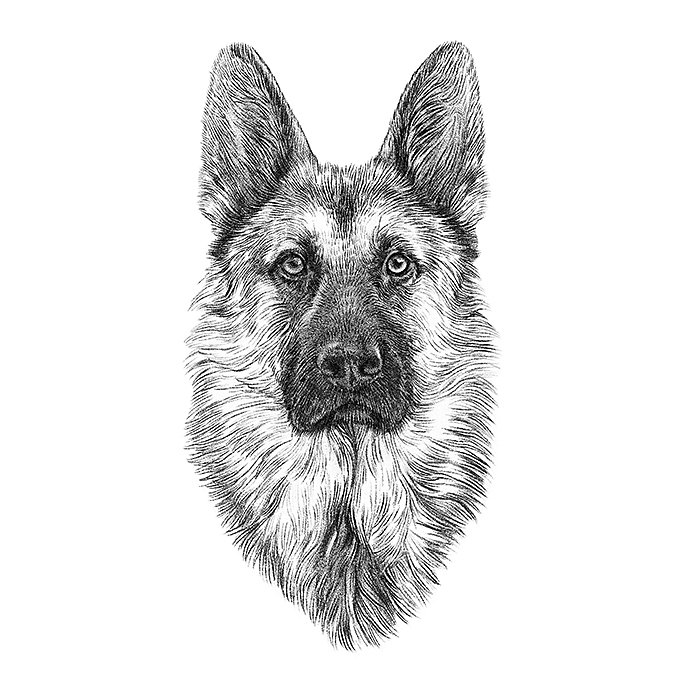
1. If you're drawing a canis familiaris looking face-on, starting time with an oval shape for its snout.
ii. Above this, describe an upside-down u-shape, for the head, and then a small oval or triangle for its snout.
iii. Draw the ears adjacent, which will either flop downward the sides of the head in a half-oval shape or point upwards in a triangle shape.
4. Inside your upside-downward u-shape, describe two spots for eyes and 2 arches above for eyebrows. Pay close attention to the optics, capturing these accurately is the key to creating a compelling illustration of a canine.
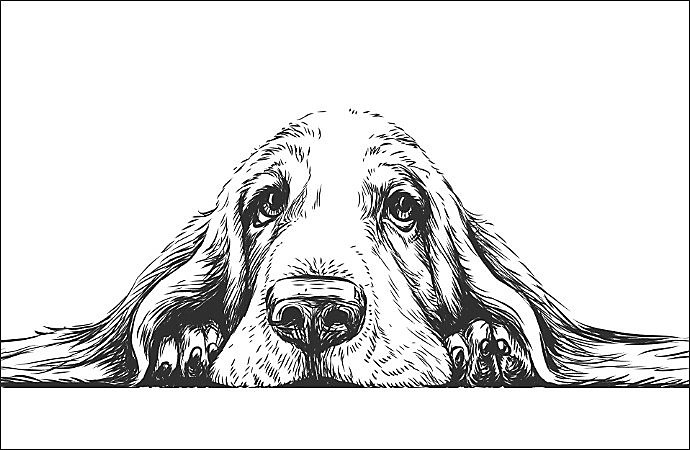
5 From the nose, depict a line downward that curves at either side, for the oral cavity.
6. Add front legs, as they look on your reference photograph, then depict a u-shape backside them, to make the trunk.
seven. Finally, sketch two u-shapes either side of the bottom of the body, for dorsum legs, and so add the tail. You can flesh out your drawing in more than detail, using the reference photo.
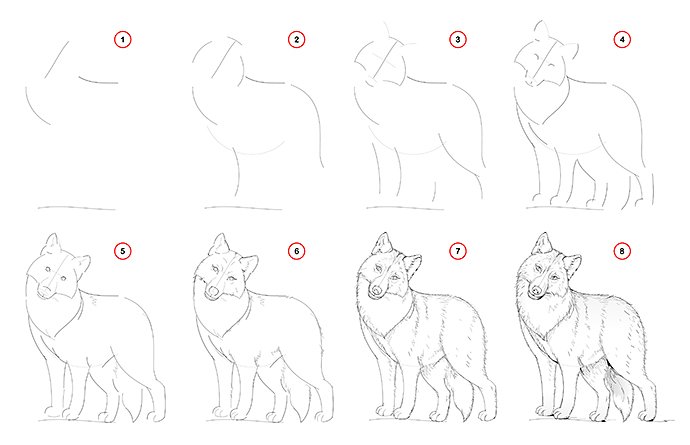
How to draw a wolf.
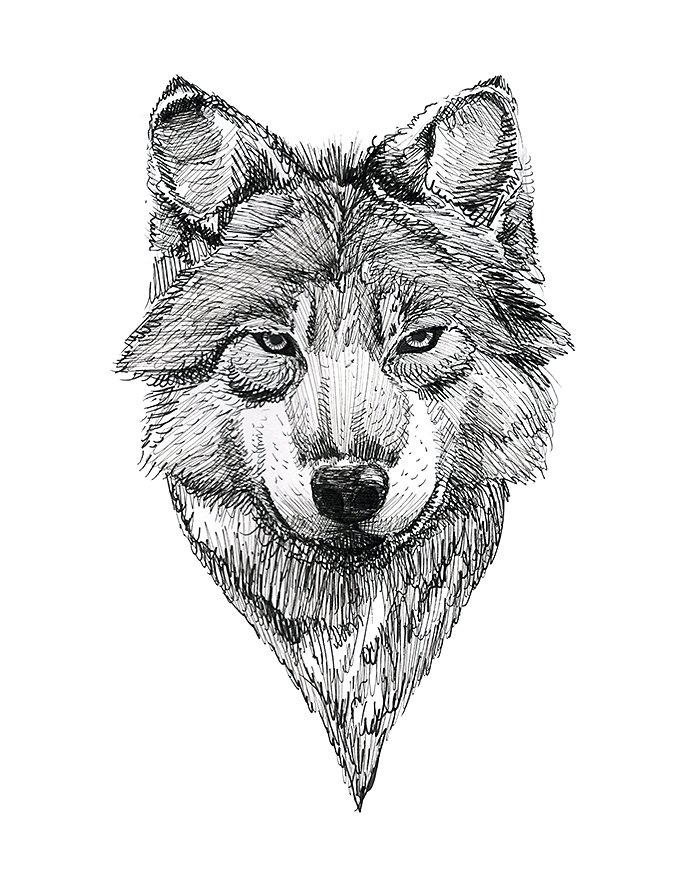
1. This will be a similar composition to sketching a dog, so follow those steps, simply with the following changes.
two. Wolves' faces are slightly leaner, so the wolf you're drawing should have a slightly narrower oval for a snout.
3. When drawing eyes, they need to be closer to the front end of the confront, likewise, when you are calculation middle color, information technology will more often than not be lighter.
4. The body will exist slightly leaner and taller, which ways when drawing the u-shape to form information technology, it needs to exist thinner and longer.

5. Legs volition also need to be lengthier, so depict longer lines when calculation them.
6. Wolves' ears are pointier and will face up, so you'll demand triangles to course these, close to the pinnacle of its head.
7. Their fur volition exist more rugged when y'all're sketching out this particular.

one. Commencement by creating a simple line guide. Draw a slightly curved line for the back leg, an opposing line for the body, and then add together a guide for the neck and caput.
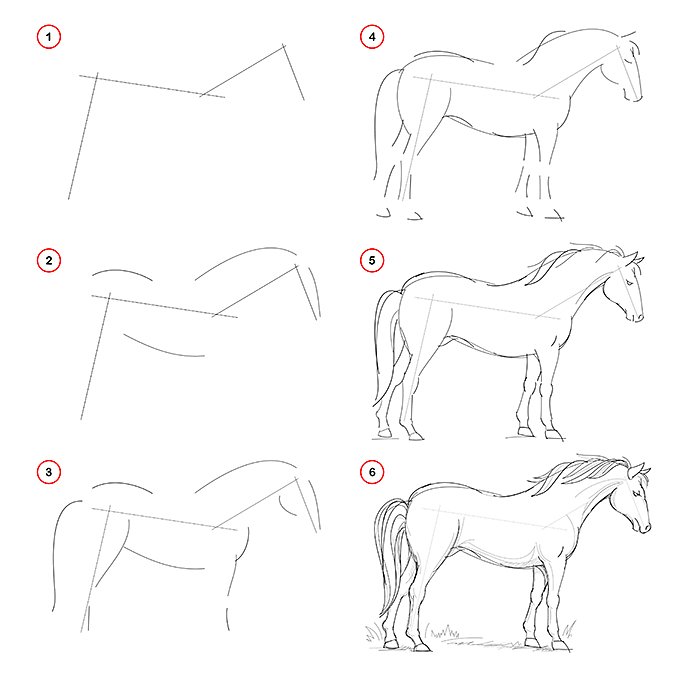
2. Next, add several different semi-circles that will class the horse'southward torso, chief torso and upper back legs.
iii. Draw two circles that form the top of the head, and the other a slightly smaller one that will exist for the mouth – then connect these with lines.
4. Add ears past sketching gently-curved triangles at the top of the caput.
5. Move onto the legs, which should exist fabricated upwards of several different circles, which volition reflect the knees and the slightly thicker upper thigh.
half-dozen. The front legs of a horse will look different to the back, so study your reference photo to get that shape right.
vii. Connect these circles by lines to create the leg outline, then connect your body circles to mimic the body shape of a horse.
eight. Add extra layers, drawing the horses' mane, tail and hooves, to consummate the sketch.
How to describe a rose.
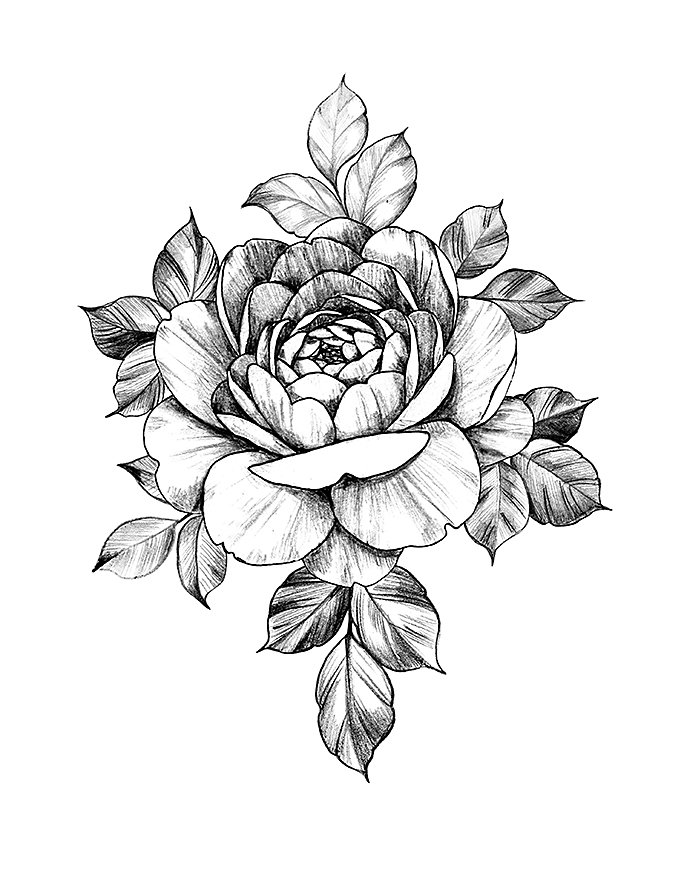
ane. Create an open topped egg-shape in the centre of the page, as the inner bud of the bloom, then add an opening oval at the top.
two. Draw your rose with mini-petals inside this opening oval, then create a heart shape that includes the opening oval within it.
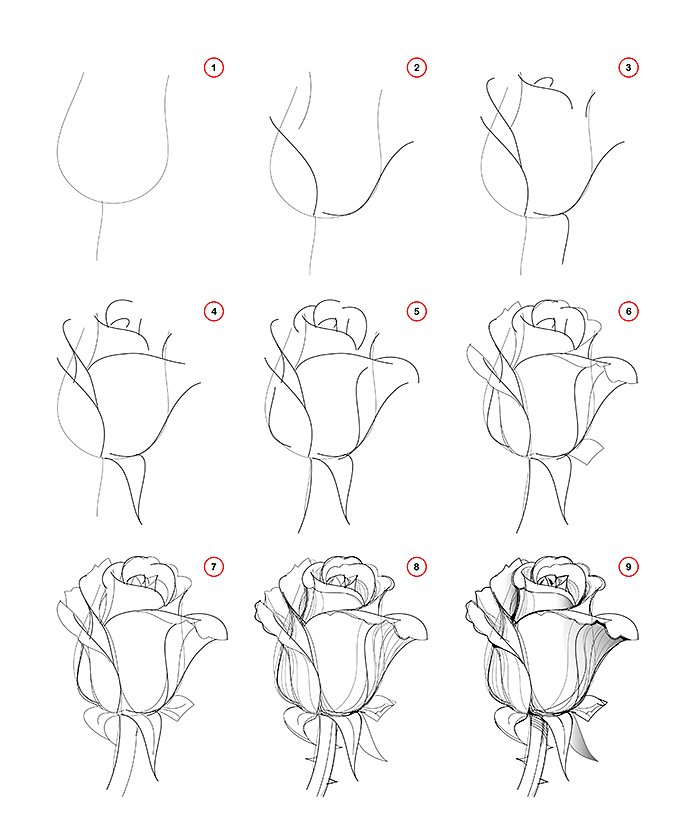
3. Add another larger heart, to comprehend the smaller centre and inner petals each time.
4. Repeat this several times, to mimic the advent of petals opening with each layer.
five. With each layer, start to add details to the petals, such as the faint lines that display its texture.
6. Sketch a 'cup' of petals to go effectually the outside of the inner bud, starting with smaller ones, so somewhen make them bigger.
7. Finally, add together a stalk at the bottom, equally a cylinder shape, that connects to the rose – you tin can include smaller details, such as thorns, to this.
How to describe a face.
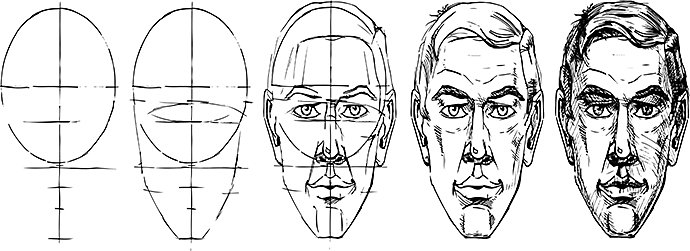
i. Brainstorm your face drawing with a large circle for the upper half of the head, then a horizontal line for the chin and jawline.
2. Describe a vertical line through the middle of the face and add eight horizontal lines to split the face up into different portions.
3. On your central line, draw in your eyes, then sketch two vertical lines down from the inner edge of the eye, to the next horizontal line.
4. In-between these two lines, depict in your olfactory organ, co-ordinate to your reference photo.
five. Just above the eyes, add together in eyebrows, using a thicker pencil or digital pen.
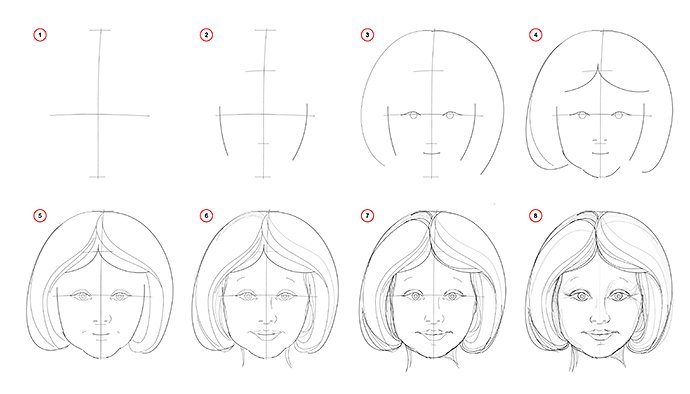
6. Depict a line down from the center of each heart, towards the horizontal line that is one section below the nose.
vii. From each of the vertical edges of these lines, draw in the lips.
eight. Add in the ears, which should get-go just above your central line and stretch down to the bottom of the nose.
9. Finally, add detail into the hair, every bit it appears in your reference image.
How to draw eyes.
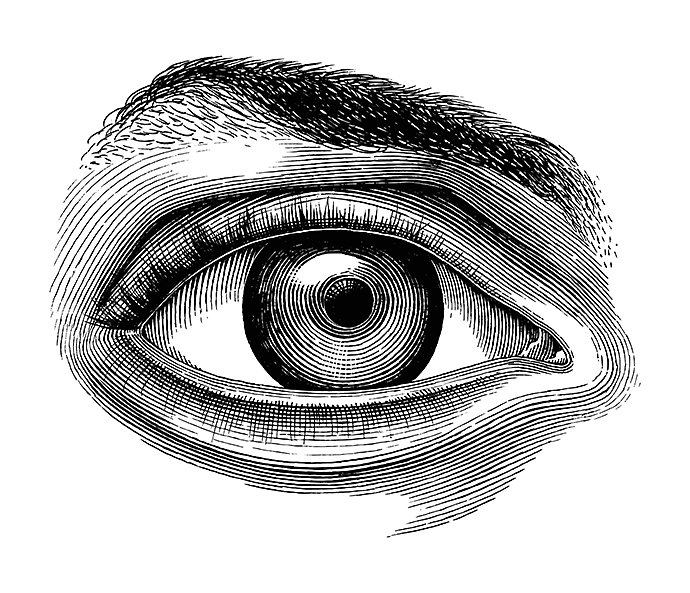
1. Apply the outline of a head, as detailed in the drawing a face section, to draw your eye, and space your eyes one middle-width apart, either side of the olfactory organ.
ii. Describe a circle for the full eyeball, most of which will be obscured by eyelids.
3. Add a smaller circle in the middle of the eyeball to create the iris, then an fifty-fifty smaller ane inside that for the pupils.
four. Sketch curved lines over the eyeball, revealing simply the iris.
5. Add extra lines around this for the eyelid folds and tear ducts in the corner of the eye.
6. Finally, add eyelashes on the upper part, starting from the right edge of the eyelid, then lower lashes, beginning a only beneath where the lower lid touches the eyeball.
How to draw a nose.

1. Sketch a circle, which will grade the brawl of the nose and draw two slightly curved vertical lines either side of it.
2. Draw a horizontal line into the circle's centre and add two triangle-similar shapes either side of the circle, for the nostrils.
iii. Shade a U-shape effectually the circle and vertical lines, to create extra nose shape.
4. And so, shade in the nostrils, to give a more natural curve to them.
5. Add in two mini-circles at the bottom of the nostrils.
six. Then describe the nose how it looks in your reference photos, softening the harder sketch lines you drew earlier and shaping it accordingly.
How to draw a mandala.

ane. Describe a dot in the eye of your slice of paper, so depict a cross of equal lengths.
two. Add in three dots on each line. The showtime should be half an inch from the center, the 2nd an inch from that and the 3rd i.5 inches from that i. Repeat this for each line.
3. Draw another cross, at a 45-degree angle, the same length and with identically spaced dots on it.
iv. Connect these dots by drawing iii separate circles.
5. Offset to add fine details – one idea could be to draw teardrops, petals and circles to create a symmetrical pattern.
6. Shade in whatever details around those shapes for a colourful mandala drawing design.
30 more ideas of things to draw.
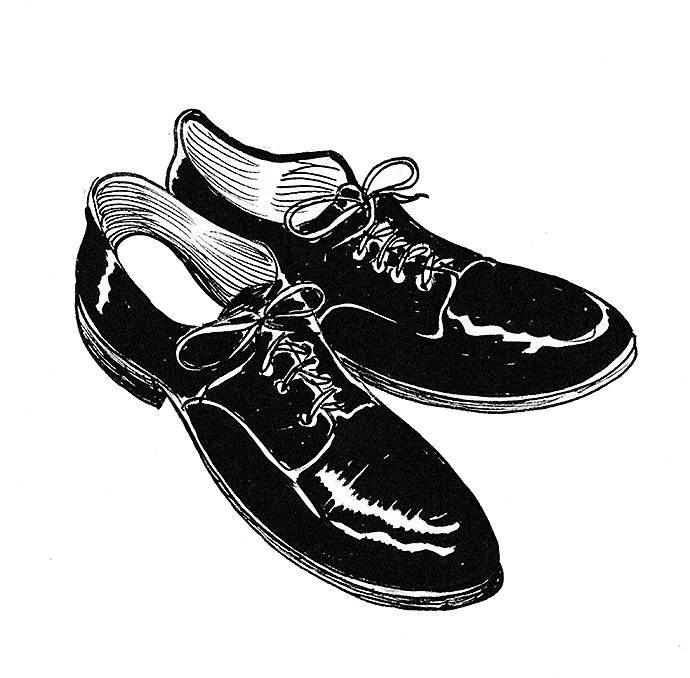
one. Pair of shoes – find your oldest pair to capture all their creases and wear and tear.
2. Seashell – sketch the unique grooves and details, to take a become at nevertheless life cartoon.
3. Clouds – tilt your head and start experimenting with curved lines in the sky above.
4. Book/anthology cover – recreate your favourite novel or album encompass.
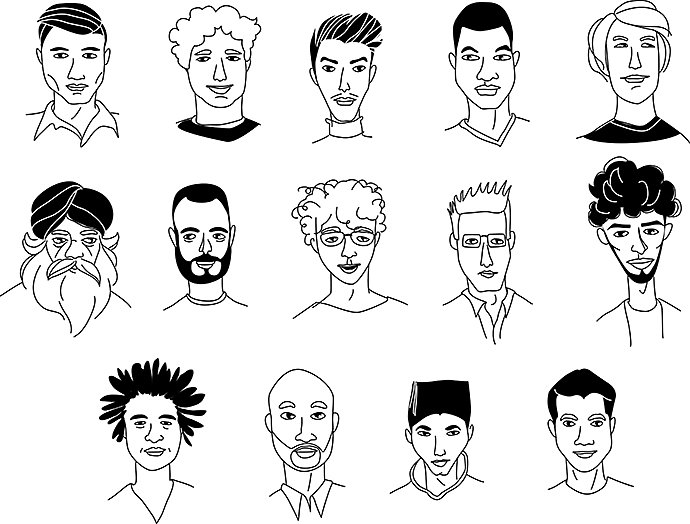
five. Yourself as a drawing – endeavour a different kind of self-portrait to create yourself on-page.
6. Bridge – capture the structure of the bridge itself, too as the landscape surrounding it.
7. Table and chairs – classic still life, where y'all tin focus on nearby objects too.
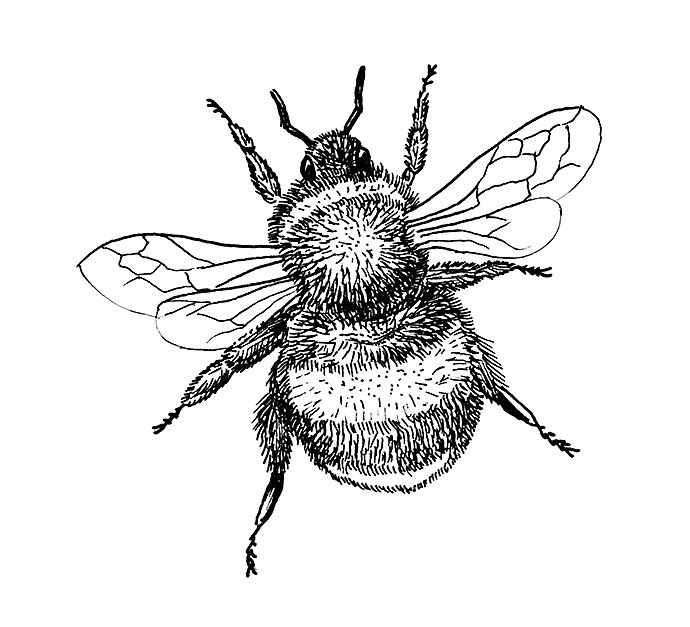
8. An insect – a unique subject, drawing an insect can help yous go improve at sketching tiny details.
9. TV setup – we spend near of our lives in front of our TVs, so why not draw your home setup?
10. Pianoforte – perfect for introducing yous to 3D cartoon, with tons of item to capture.
11. Infinite rocket – capture this awesome structure with all its fine details.
12. The moon – sticking with the space theme, capture its crevices, grooves and shadows.
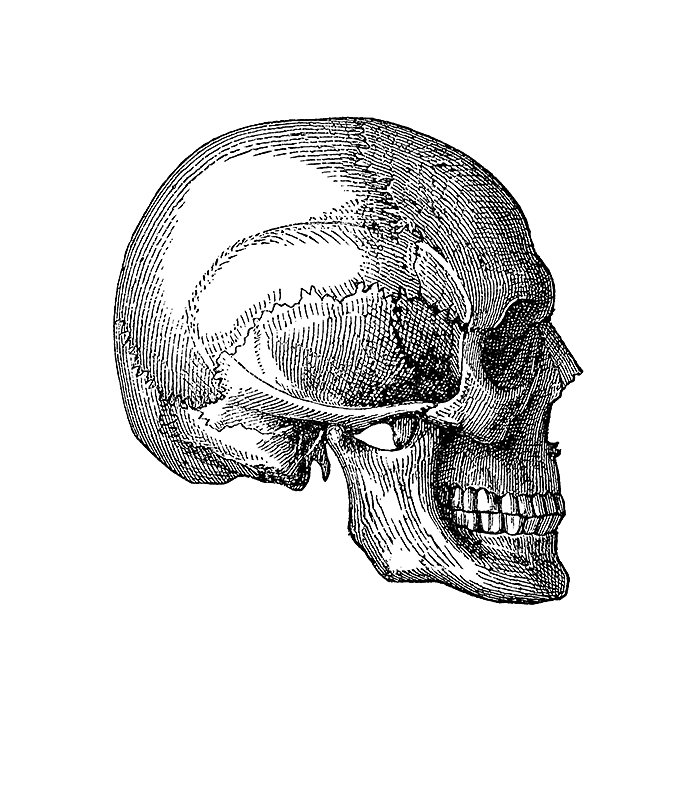
13. Skull – another fantastic way to get used to sketching shadows – perfect for Halloween-themed compositions.
fourteen. Leaves – whether scattered on the floor in an autumnal scene or living on a branch.
xv. Lightbulb – recreate the bulb itself, but also the light that shimmers from it.
16. Kitchen – draw still life in your kitchen space, capturing the details of appliances and objects in the space.
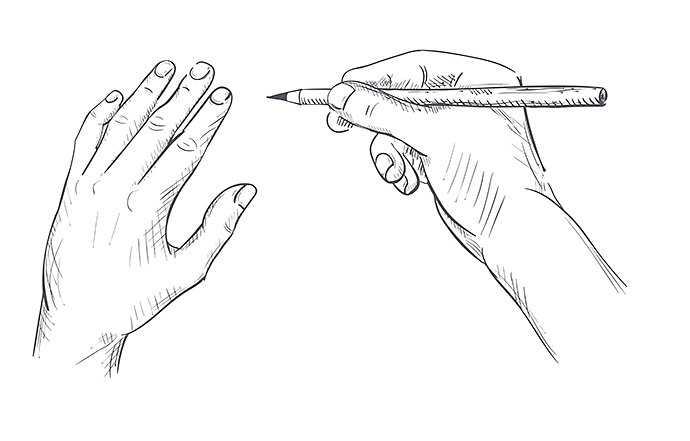
17. Hands – recreate the lines, marks and creases in your easily, to get used to drawing the human form.
xviii. Robot – a mixture of squares and circles, robots tin can exist a fun thing to draw.
xix. Boutonniere of flowers – this will aid yous outset focusing on the small details of each petal.
20. Tech around your domicile – this could be a pair of headphones, a video game controller or TV remote.
21. Vino bottles – capture both the sleek outline of the canteen and any intriguing labels too.

22. Car – head to your garage to sketch the intricate outlines of your vehicle, forth with more than delicate details of wheels, trims etc.
23. Garden bench – stride into your garden or to your local park to draw a bench and anything surrounding information technology.
24. House – while you're outside, sketch the outside of your domicile – windows, doors and all.
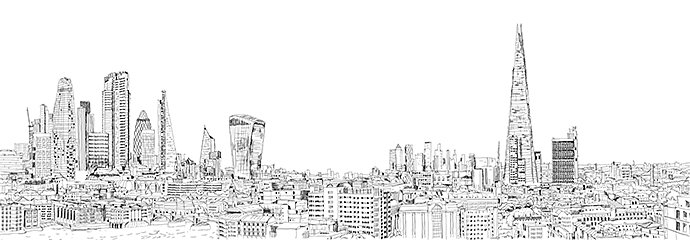
25. Metropolis skyline – pick your favourite cityscape and try to emulate its outline – whether during the day or at nighttime.
26. Cartoon character – choose your favourite character, hit intermission when they're on screen and mimic their appearance.
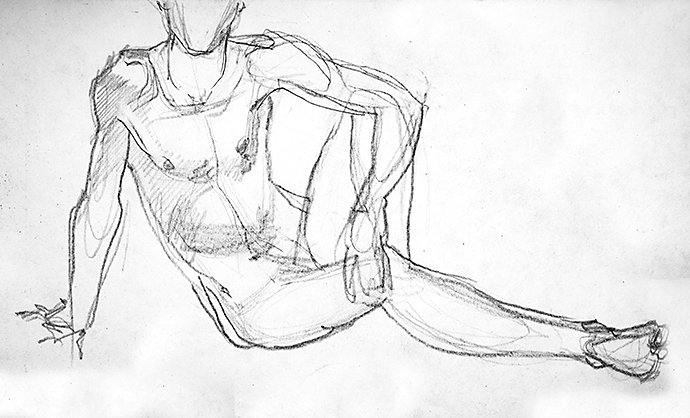
27. Man body – when you're set up to effort something more advanced, capture the human course in full.
28. Bowl of fruit – gather what y'all have and to focus on an outline get-go, particular later.
29. Kitchen cupboard – open up it upwards and sketch what's within, information technology'll go you used to capturing many different-shaped objects.
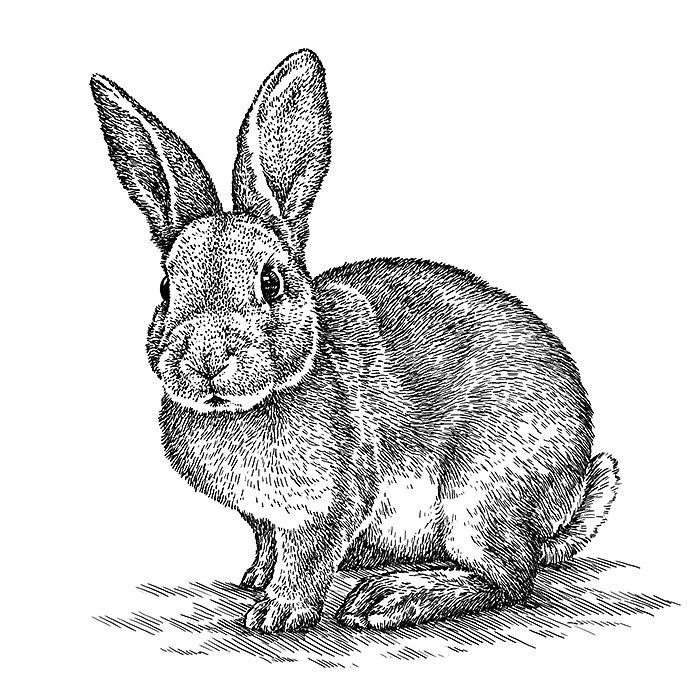
30. Family pet – if you can get your cuddly friend to sit down still long enough – or have a photo and apply it for reference.
7 drawing techniques for beginners.
Getting your technique but right can have time if you're learning to draw. But these tips should assistance yous notice your own style and refine it over time. If you're already comfortable with your skills, they'll help you castor up on the fundamentals.
1. Find your cartoon fashion.
Whatever you lot're drawing, whether information technology's your favourite anime grapheme, a bloom in your back garden or houses on a city street, the principles of drawing stay the same.
- Pay attention to shapes – they're edifice blocks that give a drawing structure.
- Accept your time – don't rush, this will only cause mistakes and add time in the long-run.
- Practise – like anything, yous'll only go better by repeating and trying it once again.
Using these rules, you can start to refine your ain style over time. You might observe that pointillism is your thing, cartoons are your forte, or line drawings might arrange your skills.
2. Start with basic shapes.
Basic shapes are an essential starting bespeak when drawing any object, specially when turning a 3D object into a 2D drawing.
"You're non just drawing what you see in front of you lot. Yous're drawing the other side as well."
Lucas Elliott, Artist.
To create that depth, break down any you're drawing into:
· Circles
· Rectangles
· Triangles
You lot can and then smooth these edges out later on, to create a more realistic final image. To get this part right, imagine how the figure would look in 3D and from every angle – like information technology would in real life.
iii. Study reference photos.
When you're just starting out, go on a picture of what you're drawing in front end of you. It'll give you something to mimic and help you lot better empathise how to depict the outlines and small details of your subject.
"Look at reference images. The more you learn about a subject, the amend."
Kevin Jay Stanton, Artist
To find a huge drove of imagery, search Adobe Stock for inspiration yous can use for your next sketch.
4. Set rules for yourself.
When y'all're learning the basics, it can be tempting to skip to the more than avant-garde stuff. But it's important to nail the fundamentals first and master a skill beginning, before moving onto something more complicated.
For instance, as you fill up your sketchbook and are experimenting with colours, start with a limited colour palette. This volition assistance yous figure out how colours work together and won't distract you with all the possibilities out there.
"Picking a colour that I beloved, then two more than that await nice with it actually improved my colour sense. When a rule doesn't serve you lot anymore, get-go to pause it."
Kevin Jay Stanton, Artist.
five. Follow your passion.
It'south good to step outside your comfort zone and endeavor cartoon as many subjects, using unlike drawing styles, as possible. But it's equally equally important to detect and focus on sketching what yous dearest.
Cartoon is all near fun. If you lot're interested in drawing manga, for example, endeavour to create as many of your favourite characters as possible, to expand your skills in that area.
"Really pay attention to how they're drawn. You're drawing from someone else'south sketch, focus on how they build their lines. If creating from real life, pay close attention to the object and the space around them."
Lucas Elliott, Artist.
6. For larger compositions, make a grid.
When you lot graduate from small-scale sketches and desire to create bigger drawings, gridlines are a lifeline. They tin can help yous figure out where different objects belong, every bit they appear naturally.
"If you accept a photograph or illustration that'due south broken downward into quadrants, y'all can start with ane minor section and finish that commencement. Then, y'all can move onto the next one. Just makes sure you are still connecting it to the previous section, so they still relate to 1 another."
Lucas Elliott, Creative person.
7. Keep experimenting and evolving your manner.
Hither are a few tips on staying inspired and creating new compositions – ready to fill your sketchbook with astonishing drawings.
- Have a look at your environment. The globe is your canvas. Cliched, simply it'south true. Take a look effectually your home or enjoy a walk outside and expect around yous – at that place are subjects y'all tin sketch everywhere.
- Don't be afraid to daydream. When you're not thinking about ideas or forcing yourself to come upwardly with a new limerick, inspiration tin can sometimes strike. Have a moment to allow thoughts to fill your head and your next creation could arrive.
- Check out your contemporaries. A new idea is always influenced by something that has gone before. Look at what other artists are/have been doing. That includes classical artists, current stars and other beginners, to see what they're creating.
How to keep inspired and motivated.
Hither's some expert advice to help encourage your creativity to run wild and go along y'all on track when looking for creative things to draw.
"Focus on a style that you lot're most intrigued by. If you're a beginner, there's no shame in copying as much as possible."
Ethan Young, Graphic Novel Writer and Artist.
"Draw what's in front end of you lot. No matter what y'all do, your act of trying to capture it will aid."
Chris Kindred, Editorial Artist.
"A lot of what people point to with my artwork is faces, but that used to be a thing I didn't like drawing. I started doing an exercise where I focused on drawing different facial features and expressions … information technology definitely helped me."
Mildred Louis, Artist.
"At first, because things don't always come naturally, it can be discouraging and frustrating. Simply that's ever how it goes when y'all're learning something new. Practice, do, practise, and don't give upward."
Jen Bartel, Illustrator and Comic Creative person.
Keep on learning and explore the world of illustration by discovering our illustration tips.
Source: https://www.adobe.com/uk/creativecloud/illustration/discover/easy-things-to-draw.html
0 Response to "Cool Things to Draw Simple"
Post a Comment